
Indium phosphide (InP) etching

Indium Phosphide (InP) is a key III–V semiconductor used in high-speed photonics, telecommunications, infrared devices, and advanced RF applications. Because InP forms non-volatile etch byproducts, controlling sidewall angles and suppressing polymer redeposition are critical challenges in plasma dry etching.

Samco provides advanced ICP-RIE etching solutions engineered to achieve vertical profiles, smooth surfaces, and highly accurate dimensional control for InP-based devices. With decades of III–V process expertise, our systems deliver reliable results for both R&D and volume manufacturing.

Samco InP Process Solutions

Samco provides etching, deposition, and surface-processing systems for InP-based device fabrication, supporting ø3-inch, ø4-inch, and ø6-inch wafer processes. Our lineup includes ICP-RIE, CCP-RIE, PECVD, and ALD systems for applications such as grating, ridge, lens, photonic crystal, and advanced InP device structures.

Why InP? Material Properties and Key Applications

InP is distinguished by its excellent electrical and optical properties:

  • Band gap: 1.35 eV
  • Electron mobility: 5,400 cm²/V·s (300 K)
  • Large lattice constant: ideal for InGaAs, InGaAsP, AlInAs, and AlGaInAs heterostructures

These characteristics make InP the foundation of:

  • High-speed laser diodes (LDs)
  • Photodiodes and high-power photonic devices
  • Waveguides and integrated photonic circuits
  • RF and microwave devices requiring low noise and high gain
  • High-efficiency photovoltaic and nano-optic structures

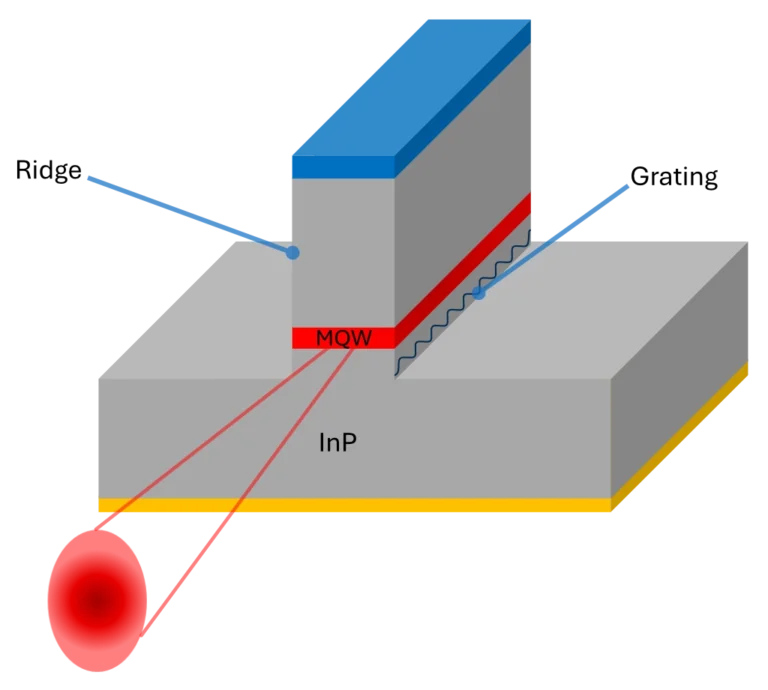
Because many InP-based structures require vertical pillars, gratings, ridges, or deep waveguide features, high-quality anisotropic plasma etching is essential.

Applications: Advanced Plasma Etching for InP Devices

InP Ridge Illustration

InP etching often suffers from rounded or tapered sidewalls due to non-volatile etch residues. Samco’s optimized ICP configurations minimize polymer deposition and enable highly anisotropic etching for pillars, waveguides, gratings, and resonator structures.

Samco’s ICP-RIE technology is optimized to address the unique challenges of InP etching:

  • Stable profile control despite complex InP etch chemistries
  • Suppression of byproduct redeposition, enabling straight sidewalls
  • High etch uniformity across small- and large-diameter substrates
  • Fine control of sidewall angle and bottom surface roughness
  • Low-damage processing suitable for photonic devices and optical cavities

These capabilities support applications ranging from laser diode ridge formation to nanopillar arrays and photonic crystals.

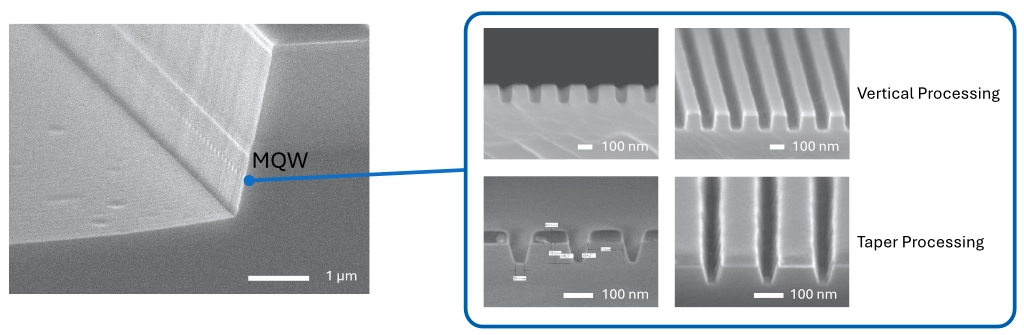
Grating Structures

SEMs showing grating structures of InP, using two different processes to acheive vertical to tapered shapes

Ridge Structures

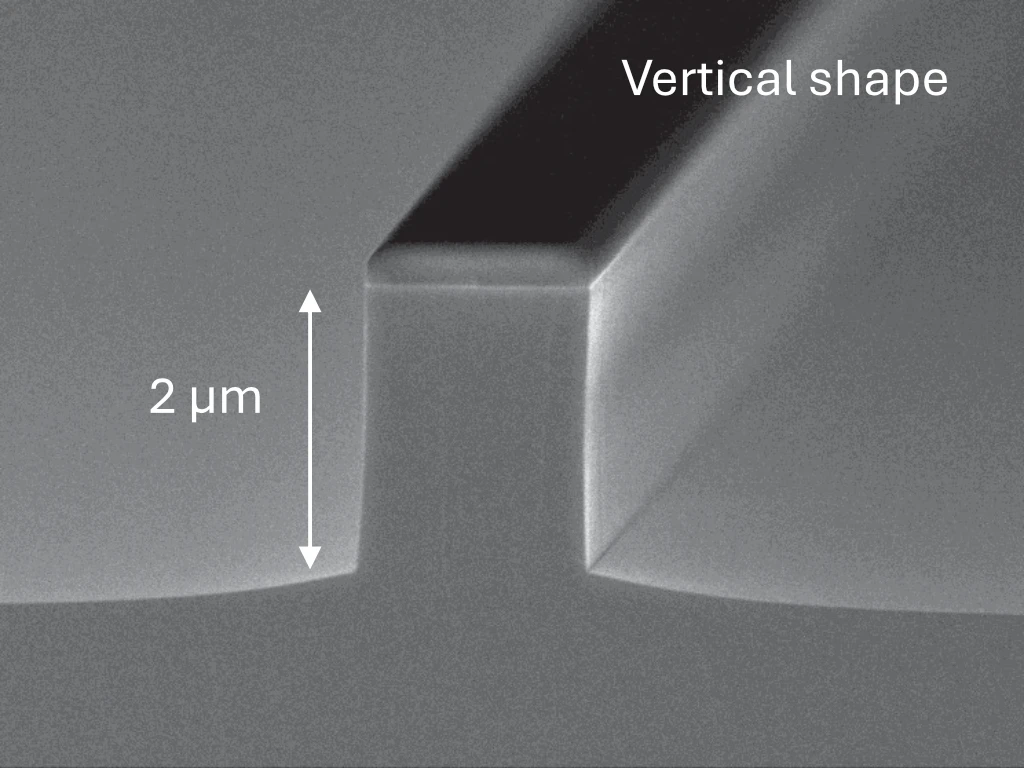
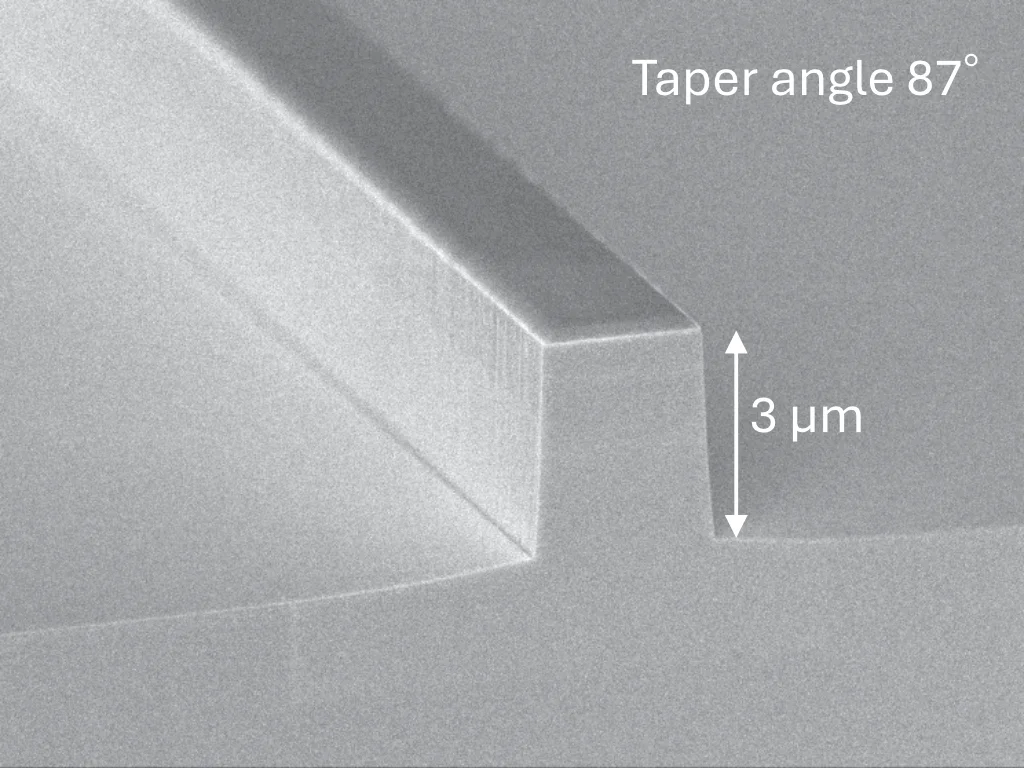
  • Precise control of ridge sidewall angle (vertical to tapered)
  • Suppression of footing
  • Deep ridge structure processing capability
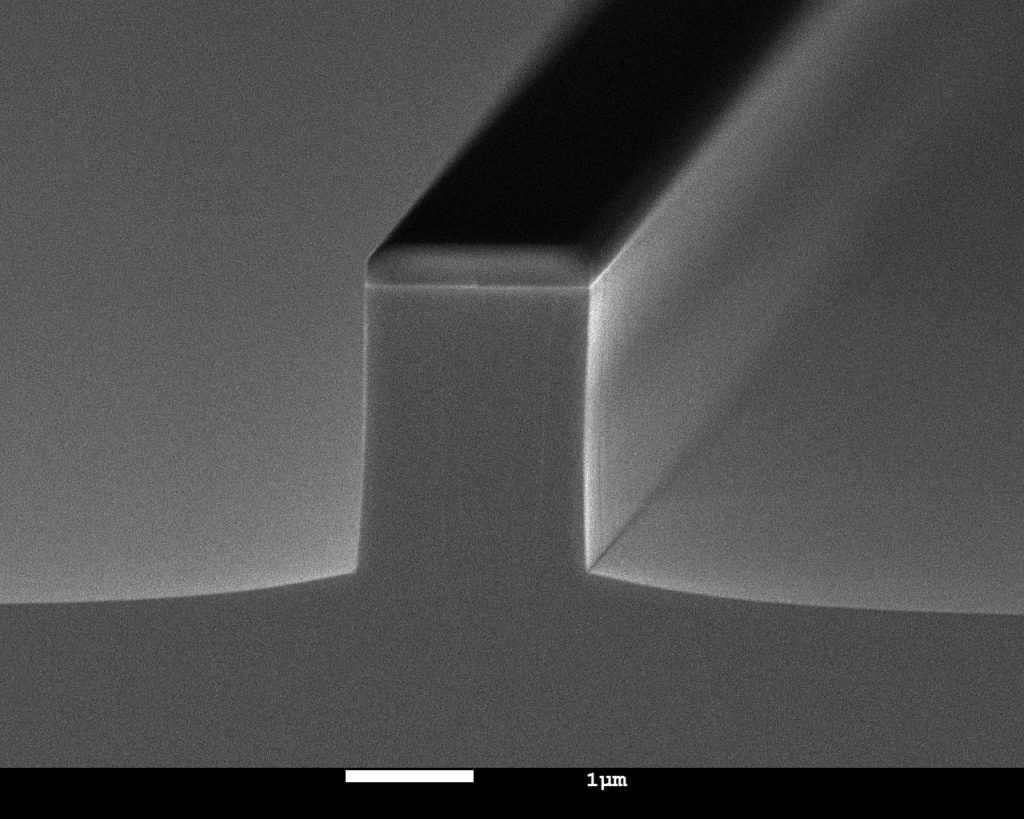
Example SEM of InP vertical ridge structure
Example SEM of InP tapered ridge structure

Lens Fabrication​

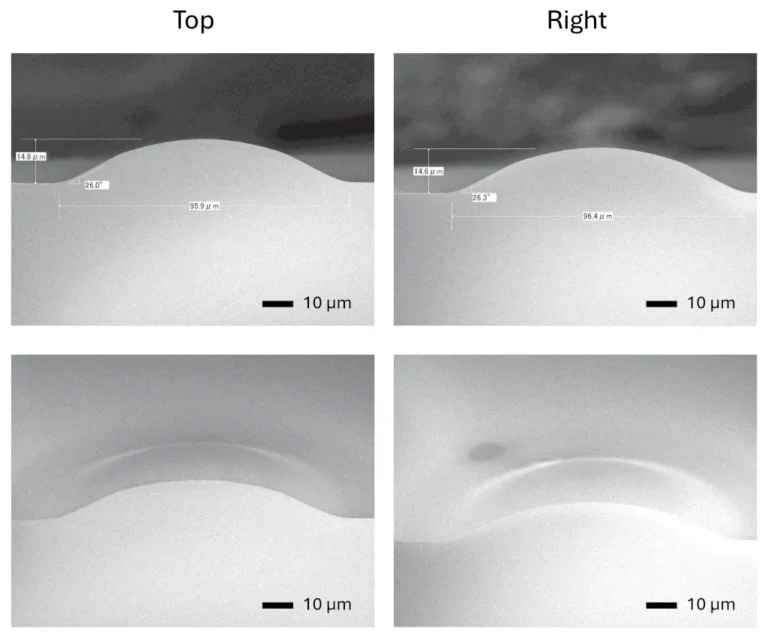
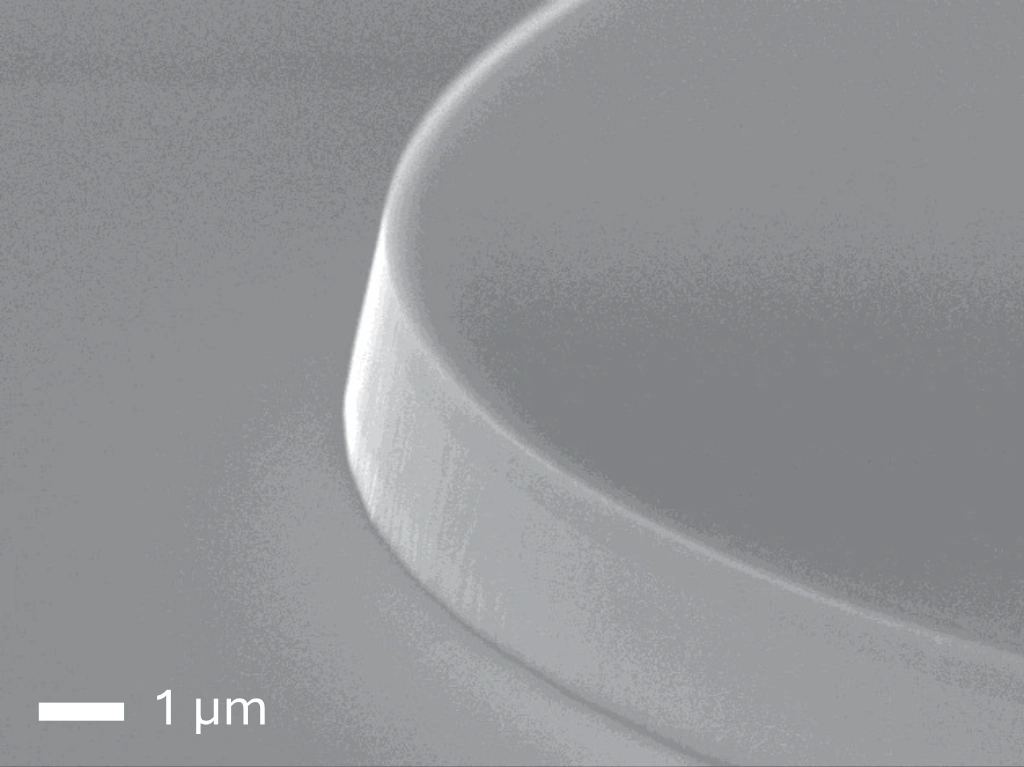
InP Lens fabrication SEMs
Chart of process parameters being adjusted for optimization of processing for stable fabrication of InP Lens profiles
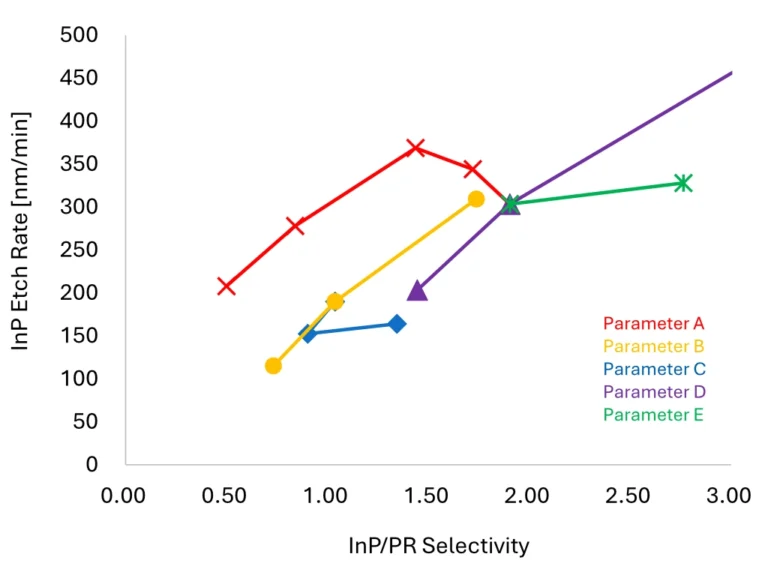
Comparison of InP/PR selectivity ratio and InP etch rate by various parameters

Endpoint Detection

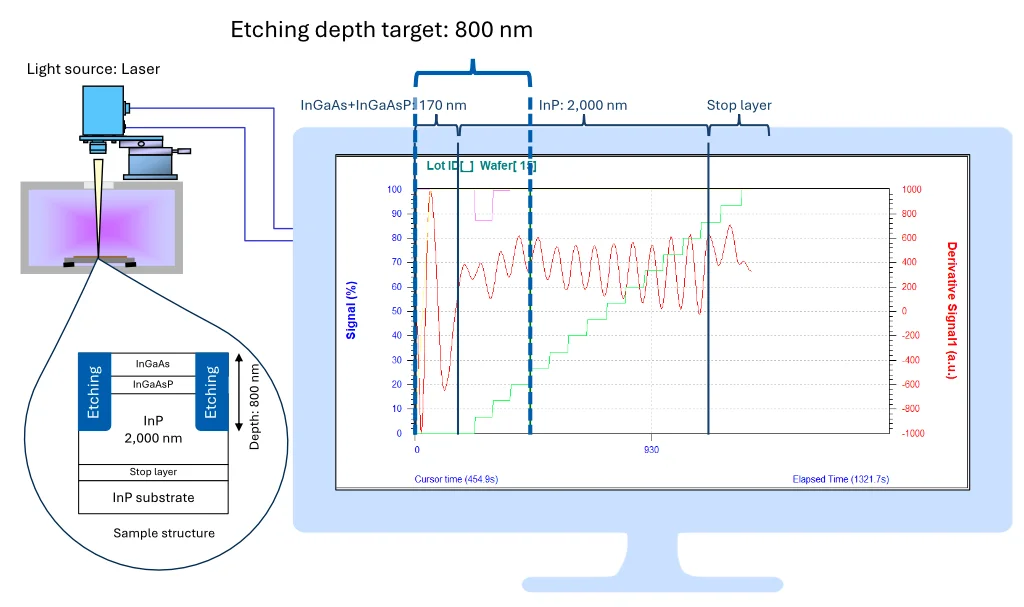
Endpoint detection via peak counting enabled by selecting an appropriate light source.

Diagram of Endpoint detection (Interferometric EPD) availiable with Samco systems for ridge fabrication

Photonic Crystals

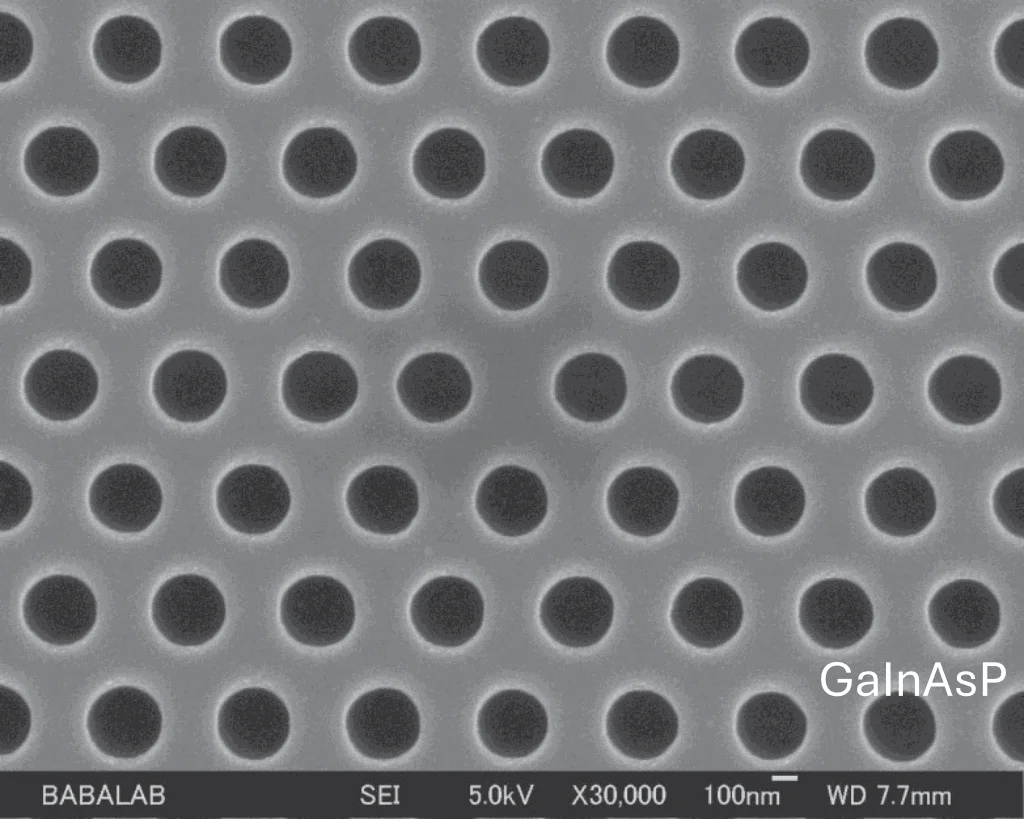
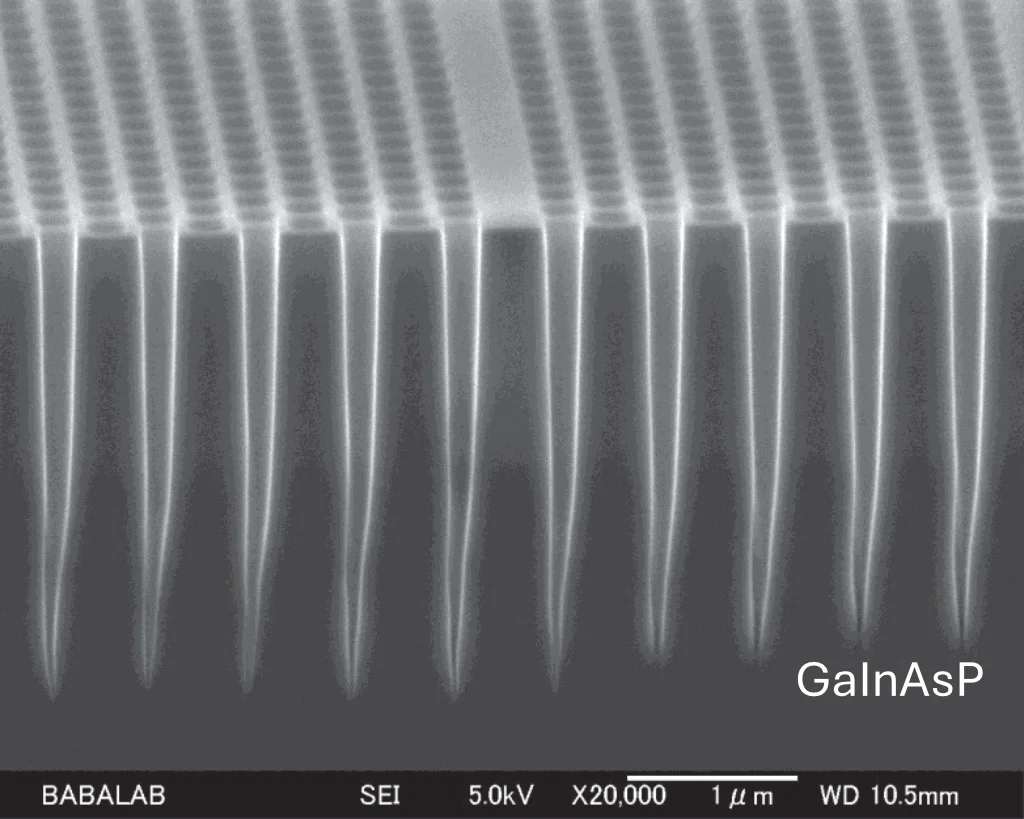
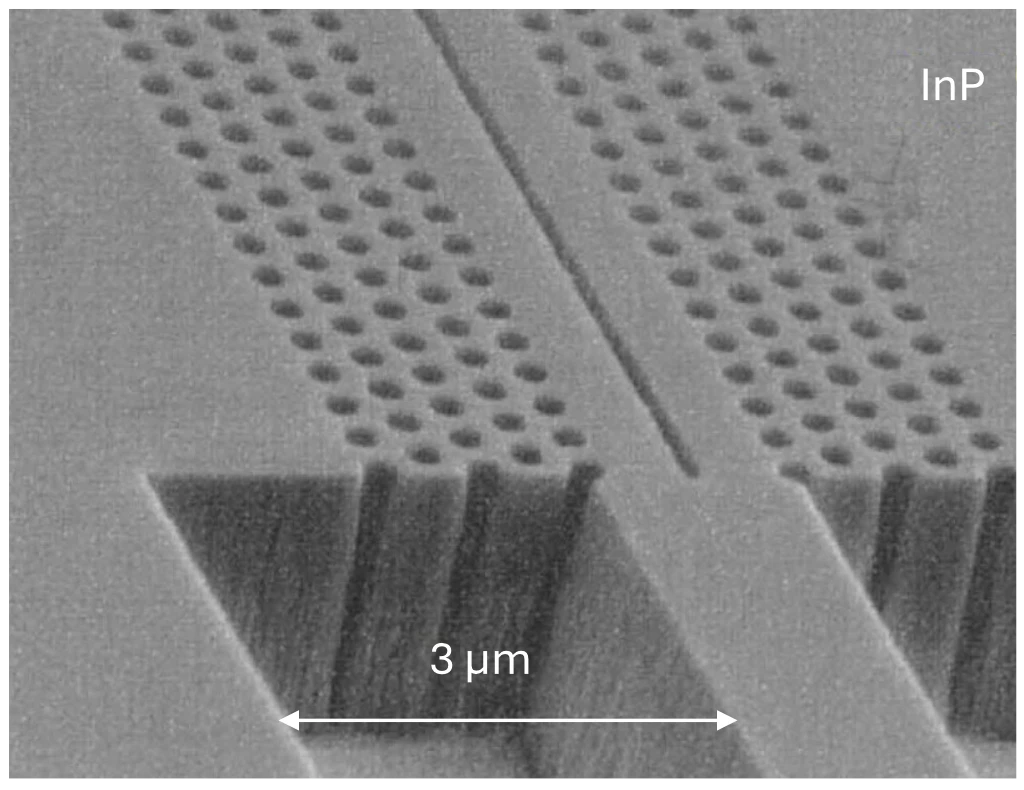
  • Enables formation of submicron periodic structures required for photonic crystals with high dimensional uniformity and vertical profiles.
  • Delivers stable processing performance for high-precision nanopatterning in optical device applications.
Top view of GaInAsP crystal fabrication SEM (Photo courtesy of Baba Laboratory, Yokohama National University )
Photo courtesy of Baba Laboratory, Yokohama National University
Side view of GaInAsP crystal fabrication SEM (Photo courtesy of Baba Laboratory, Yokohama National University )
Photo courtesy of Baba Laboratory, Yokohama National University
Photo courtesy of Tsinghua University

Advanced Structures

Optimized process parameters ensure highly reproducible control of InP/PR selectivity and InP etch rate, enabling stable realization of customized lens profiles.

  • Shape control by adjusting the selectivity ratio
  • Processing with excellent surface smoothness
InP SEM showing Device Isolation Processing with smooth sidewalls
Device isolation processing with smooth sidewalls
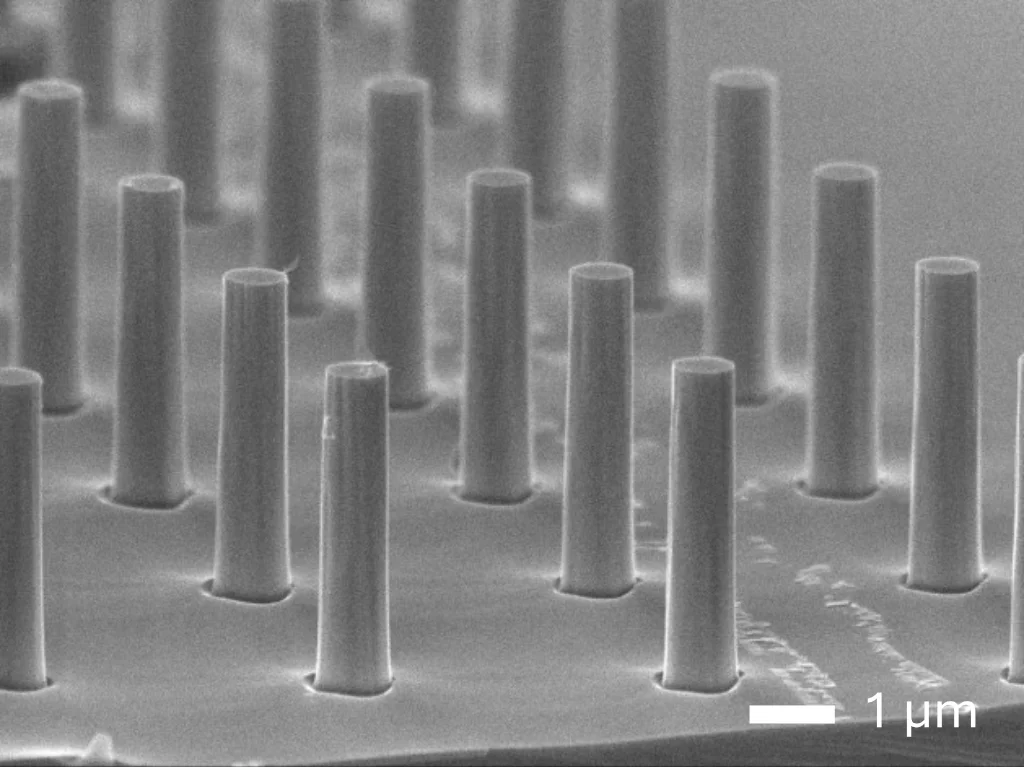
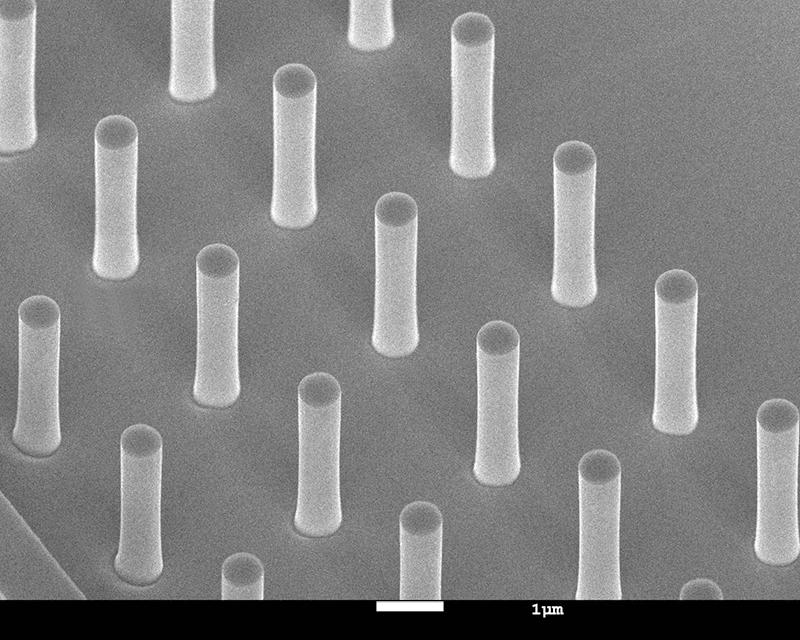
Pillar processing (for optical waveguides)
SEM showing InP mesa processing for photodiodes
Mesa processing (for photodiodes)

InP Etching Benefits & Performance

Vertical Sidewalls & Profile Stability

InP etching often suffers from rounded or tapered sidewalls due to non-volatile etch residues. Samco’s optimized ICP configurations minimize polymer deposition and enable highly anisotropic etching for pillars, waveguides, gratings, and resonator structures.

Smooth Surfaces for Optical Performance

Controlling surface roughness (RMS) is critical for high-performance LDs and photonic crystals. Samco’s process conditions maintain smooth surfaces on both sidewalls and trench bottoms, improving optical confinement and reducing propagation losses.

High Etch Rates with Excellent Selectivity

Our InP etch processes deliver:

  • High etch rates suitable for deep features
  • Strong selectivity to SiN, SiO₂, and other hard masks
  • Repeatable profile control across varied device geometries

These benefits support both fabrication flexibility and high device yield.

InP Process Data

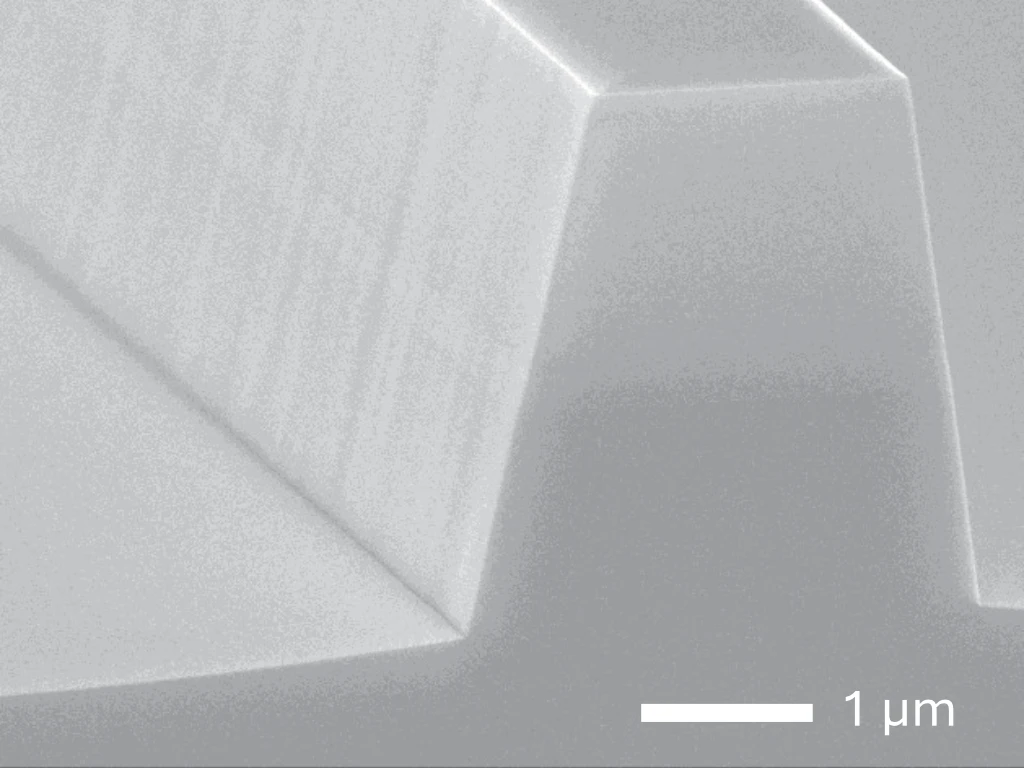
The anisotropic and small footing ridge shape with a width of 1.8 μm and a depth of 2.5 μm has been achieved.

Products

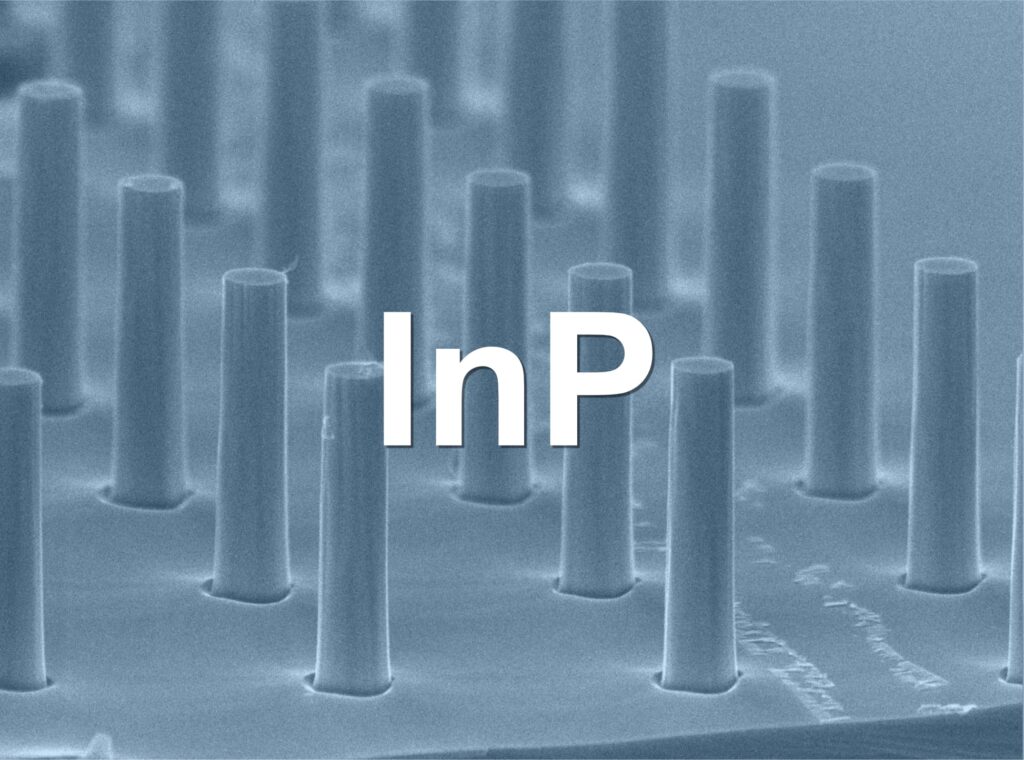
This process can be applied to semiconductor lasers and photonic crystals. A smooth pillar, 0.7 µm in diameter and 4 µm deep, with vertical, no sidewall or bottom roughness, has been formed.

Products