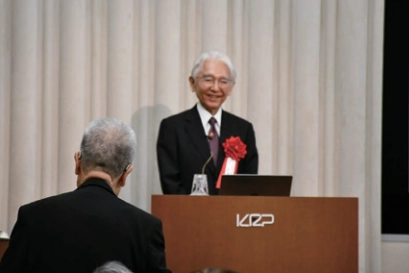
Samco Foundation's 9th Research Grant Award Ceremony (2025) Commemorative Lecture
“Turning Dreams into Reality: The ‘In-Body Hospitals’ Created by Nanotechnology — Toward a Society Where Disease Is No Longer a Concern”
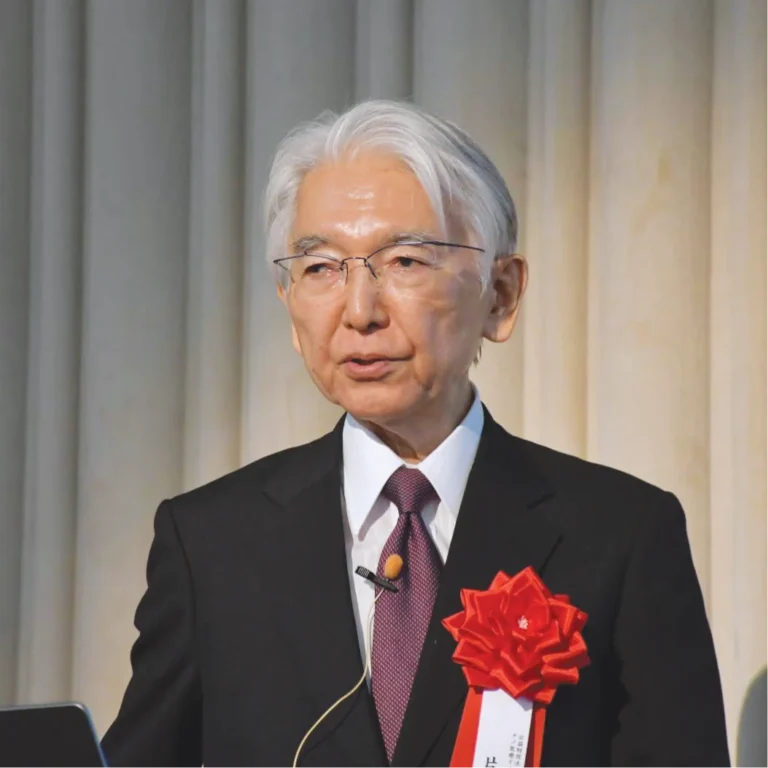
Professor Kazunori Kataoka
Center Director, Innovation Center of NanoMedicine (iCONM), Kawasaki Institute of Industrial Promotion
Professor Emeritus, The University of Tokyo
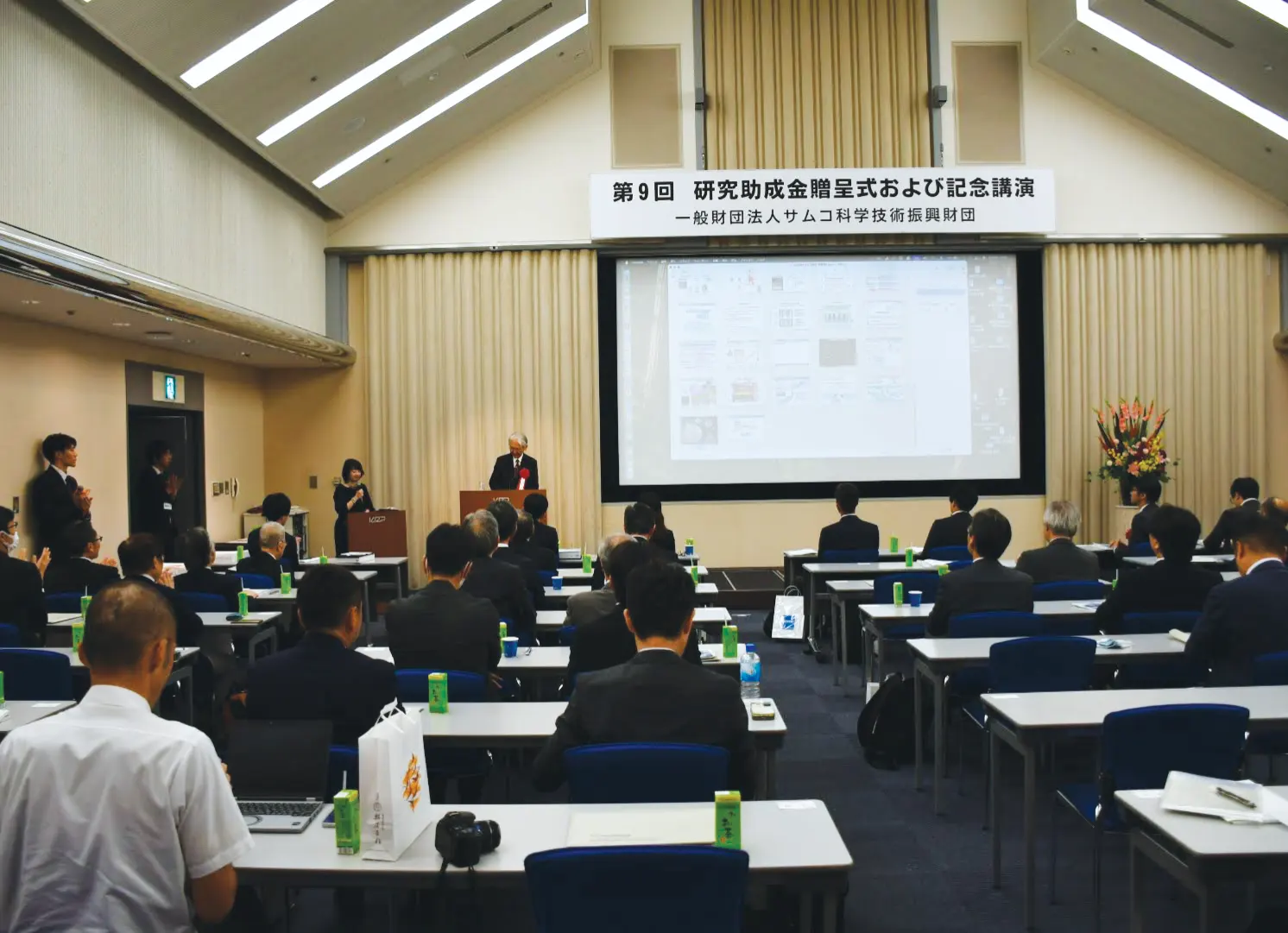
At this year’s award ceremony, we had the honor of welcoming Professor Kazunori Kataoka to deliver a commemorative lecture. The lecture focused on drug delivery systems (DDS) and their implementation in society. Reflecting on his own research career, Professor Kataoka emphasized the importance of maintaining a long-term perspective to the young researchers receiving grants from the Foundation.
Brief History
1974
B.S., Department of Synthetic Chemistry, Faculty of Engineering, The University of Tokyo
1979
Ph.D. in Polymer Chemistry, Department of Synthetic Chemistry, Graduate School of Engineering, The University of Tokyo
1979
Research Associate, Institute of Biomedical Engineering, Tokyo Women’s Medical University
1988
Associate Professor, Institute of Biomedical Engineering, Tokyo Women’s Medical University
1994
Professor, Faculty of Industrial Science and Technology, Tokyo University of Science
1998
Professor, Department of Materials Engineering, Graduate School of Engineering, The University of Tokyo
2004
Professor, Center for Disease Biology and Integrative Medicine, Graduate School of Medicine, The University of Tokyo (Concurrent Appointment)
2015
Center Director, Innovation Center of NanoMedicine (iCONM) /Kawasaki Institute of Industrial Promotion (present)
2016
Professor Emeritus, The University of Tokyo
2016
Vice Chairman, Kawasaki Institute of Industrial Promotion (present)
Introduction
I am deeply honored to have been given the opportunity to speak at the Samco Foundation’s Research Grant Award Ceremony. Today, I would like to present a somewhat unconventional topic entitled “Turning Dreams into Reality: The ‘In-Body Hospitals’ Created by Nanotechnology—Toward a Society Where Disease Is No Longer a Concern.”
During my graduate studies, I specialized in polymer chemistry, particularly the synthesis of high-molecular-weight polymers. When I expressed my desire to pursue a doctoral program, I consulted my mentor, Professor Teiji Tsuruta. He encouraged me by saying, “You could continue your current research, but if you are going to pursue something new anyway, why not choose a field related to human health and medicine, which will surely become increasingly important?” That advice led me into the world of biomaterials—namely, drug delivery systems (DDS).
Innovation Center of NanoMedicine (iCONM)
Although I have now retired from the University of Tokyo, I am currently active at the Innovation Center of NanoMedicine (iCONM) of the Kawasaki City Industrial Promotion Foundation. The Center was established just as I was reaching retirement age, and it celebrates its 10th anniversary this year.
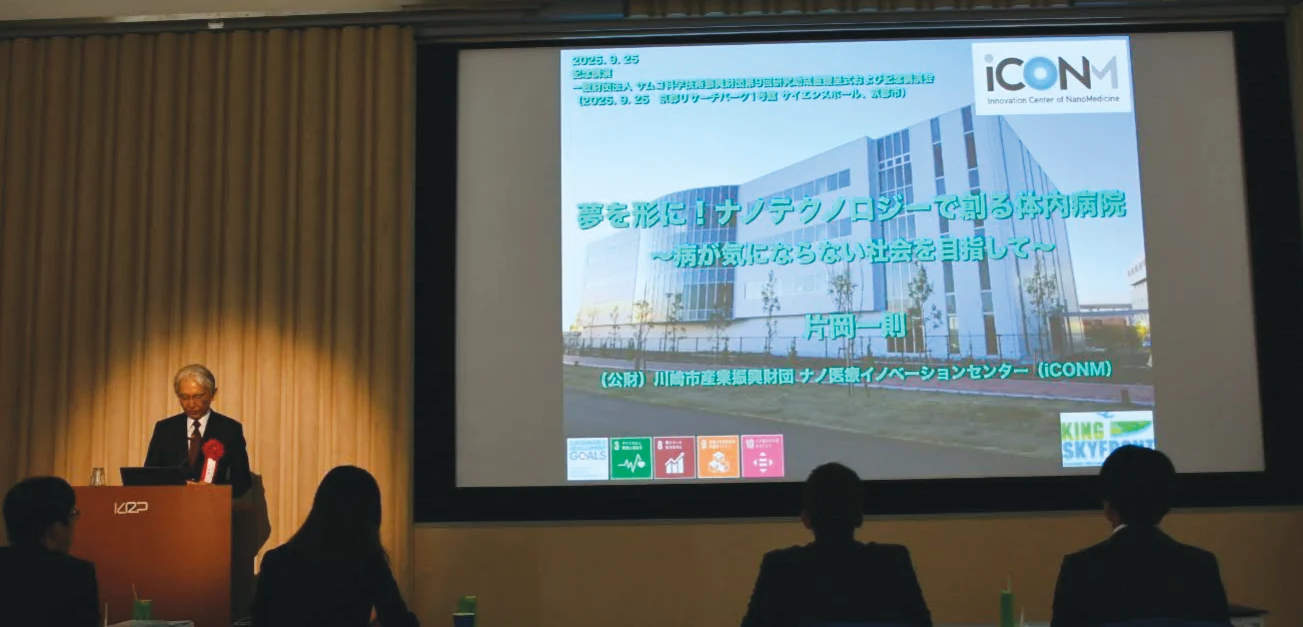
iCONM is located in Kawasaki City, nestled between Tokyo and Yokohama. This area was once dominated by heavy chemical industries, including facilities like the JFE Steel plant. However, with the recognition that the 21st century demands the creation of health and medical industries, both the national government and Kawasaki City initiated a major redevelopment of the area.
The Center is situated directly across from Haneda Airport, and since the completion of the Tamagawa Sky Bridge two years ago, it can be reached by car in just five minutes from Haneda Airport’s Terminal 3. This accessibility has made it easy for international visitors to stop by, transforming iCONM into a globally accessible research hub.
Currently, 14 life-science-related organizations are based at iCONM. A distinctive feature is that it hosts more chemical manufacturers and startups than large pharmaceutical companies. The building itself is designed to promote open innovation, featuring a three-story open atrium at its center that encourages free interaction among researchers from industry and academia.
To efficiently advance the medical application of nanotechnology, the building is vertically integrated: microfabrication on the first floor, polymer synthesis on the second, cell experiments on the third, and animal testing on the fourth. This structure allows research activities to be completed within a single facility.
The “In-Body Hospitals” and Nanomachines
The innovation we aim to achieve is the concept of an “in-body hospitals.” Just as cameras, audio devices, and mobile phones were once separate but later integrated into the smartphone, we envision consolidating medical devices, pharmaceuticals, and hospital functions into virus-sized smart nanomachines. Through this integration, we hope to transform future healthcare. This vision draws inspiration from the film Fantastic Voyage (1966), which is familiar to many of my generation. While we cannot shrink humans, we aim to create miniature vehicles capable of entering the body to freely diagnose and treat diseases.
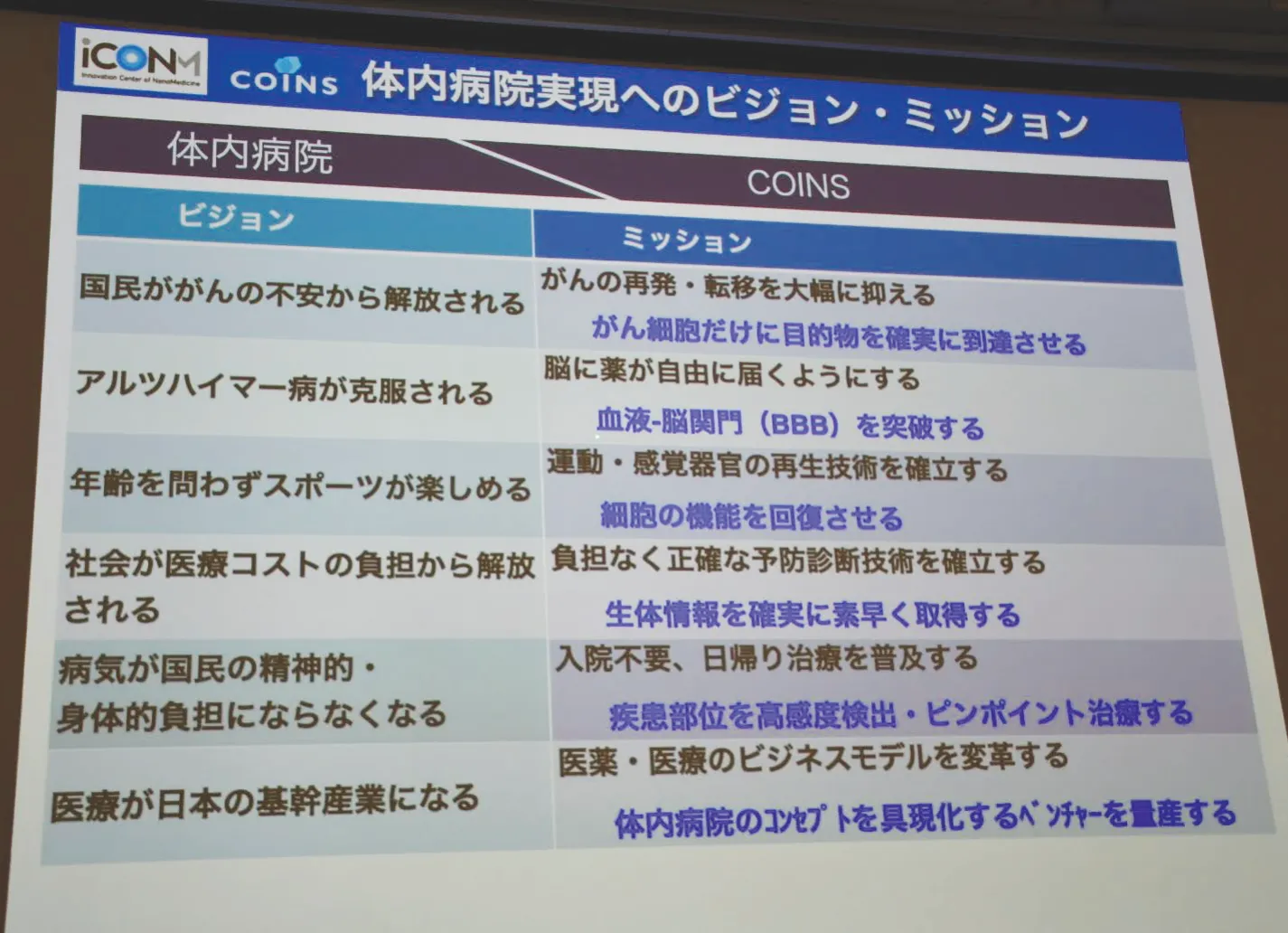
This project was selected for the Center of Innovation (COI) Program funded by the Ministry of Education, Culture, Sports, Science and Technology (MEXT) of Japan, with a target completion year of 2045. This employs a method called backcasting: envisioning a desirable future society first, then working backward to advance research and development. The society we envision is one in which “anyone, anywhere, at any time is liberated from diseases with significant social burden and becomes healthy without even realizing it.” The devices that concretely realize these in-body hospitals are nanomachines.
To help visualize their size, consider this analogy: if a human were the size of the Earth, a cell would be comparable to the Tokyo Dome, and a nanomachine would be about the size of a soccer ball. These nanomachines are not mechanical devices with gears, but rather molecular assemblies. When block polymers, composed of water-compatible segments and functional segments, are mixed in water, nanoparticles encapsulating drugs are spontaneously formed through self-assembly. Under an electron microscope, these nanoparticles appear nearly the same size as hepatitis A or influenza viruses.
A critical requirement is ensuring that nanomachines are not recognized as foreign substances in the body. By fully coating the nanoparticles with highly hydrophilic polymers such as polyethylene glycol, they can circulate stably in the bloodstream without clumping. DDS using nanomachines enables drugs to be delivered efficiently to targeted sites. Normally, drugs administered into blood vessels spread throughout the body, causing side effects. Our DDS, however, can deliver drugs only to the intended target site. This concept aligns with what Hippocrates wrote many centuries ago: “A good medicine is one that acts only where it is needed.”
Social Implementation of DDS
In DDS, it is essential to prevent drugs from being eliminated by the liver or kidneys as they circulate through the body. One representative nanomachine for DDS we developed—polymer micelles—successfully maintain blood concentrations of anticancer drugs and dramatically increase their delivery to tumors compared with unencapsulated drugs. This is possible because tumor blood vessels are highly permeable, with gaps not found in normal vessels. DDS Nanomachines do not leak from healthy vessels but selectively accumulate in tumor tissue. Using high-speed confocal laser microscopy, we directly confirmed this phenomenon in live mice.
Nanomachines can also be equipped with environmental sensing and stimulus-responsive functions. For example, once inside cancer cells, nanomachines detect the acidic environment of endosomes and release their payload, killing the cancer cells. This technology not only enhances therapeutic efficacy but also reduces side effects. Cisplatin, a common anticancer drug, is known to cause kidney and inner-ear toxicity. However, when delivered via nanomachines, hearing impairment was completely avoided in guinea pig experiments and later confirmed in human clinical trials.
We are also developing light-based therapies. Using nanomachines loaded with photosensitizers, photodynamic therapy (PDT) generates reactive oxygen species upon light irradiation, killing cancer cells. This approach has enabled bladder cancer treatment that reduces tumors without damaging the entire bladder.
More recently, we have been advancing sonodynamic therapy (SDT), which uses focused ultrasound. Nanomachines carrying substances that generate reactive oxygen species upon ultrasound exposure are delivered to tumors, where ultrasound irradiation selectively kills cancer cells. This therapy has shown dramatic improvements in pet dogs with cancer and is currently undergoing clinical studies in human pancreatic cancer patients, where its safety has been confirmed.
We are also actively working on nucleic acid therapeutics. Only about 1.5% of the genome encodes proteins, while the remaining non-coding regions are increasingly recognized as key contributors to disease. Nucleic acid drugs can act on these regions and are attracting significant attention.
Our research focuses on nucleic acid therapeutics for glioblastoma, a malignant brain tumor. The brain is protected by the blood–brain barrier, which limits drug delivery. However, by downsizing nanomachines, we have developed a unit capsule-type nanomachine capable of passing through this barrier. This nanomachine, approximately 17 nm in size—comparable to an antibody—can be fabricated using a simple process. It accumulates efficiently in the brain, suppresses tumor cell proliferation by over 90%, and significantly improves survival rates. Clinical trials for this technology began in 2024.
In addition, we are pursuing regenerative medicine using messenger RNA (mRNA). Unlike DNA, mRNA does not damage genes and is therefore safer. We have developed nanomachines carrying mRNA that promotes cartilage regeneration and confirmed smooth regeneration in animal studies. Clinical trials for osteoarthritis treatment were submitted for approval in Australia this July, and the world’s first mRNA-based regenerative therapy is expected to begin soon.
Our ultimate dream is brain regeneration, in which nanomachines deliver mRNA to the brain to rejuvenate neurons. While this hasn’t been achieved yet, I sincerely hope the younger generation will make it a reality.
Q&A Session
Q: How did the concept of the “In-Body Hospitals” originate?
A: It’s a rather unconventional title, but it emerged during discussions with team members while we were formulating the MEXT COI Program proposal. As we explained internal biological phenomena and stimulus-responsive nanomachines, someone remarked, “That’s like having a hospital inside the body.” That is how the term “in-body hospitals” was born. Since this project cannot be completed in three or five years, we set a long-term goal of 2045 and created a roadmap by working backward from that future vision.
Q: Do nanomachines stop functioning after one use? Wouldn’t large quantities be required?
A: That is a very perceptive question. Current nanomachines are designed to break down after a single use. However, it is not necessary to deliver drugs to every cancer cell. When cancer cells die, they release specific proteins that activate immune cells, which in turn recruit cancer-fighting T cells. In other words, cancer can be treated by leveraging the immune system, without targeting every single cell.
Q: Is eternal youth or immortality the ultimate dream, and is it possible?
A: Unfortunately, that is absolutely impossible. However, extending healthy life expectancy is achievable. Our successor project targets senescent cells, which cause aging. By eliminating these senescent cells, we may be able to slow aging and reduce cancer susceptibility. Science and technology expand our options by making the impossible possible. How society utilizes these advancements is a question we should all consider.
Q: Do you have a message for young researchers?
A: That is perhaps the most difficult question. My fundamental mindset is curiosity that crosses boundaries. Encouraged by my supervisor, I entered a completely unfamiliar field, which allowed me to view my own research objectively. Staying within a comfortable research area is fine, but stepping beyond it into seemingly unrelated fields can lead to unexpected discoveries. Japanese science and technology are world-class, and I hope young researchers will boldly take on such challenges.
Lecture Date: September 25, 2025 @ Kyoto Research Park