
Since its founding as an equipment manufacturer specializing in the development of plasma CVD systems and processes, Samco has provided products that combine originality with practical usability. In addition to conventional film deposition technologies using SiH4, Samco has actively developed plasma CVD technology utilizing liquid precursors (LSCVD®), which offers enhanced safety.
In recent years, as semiconductor and electronic devices have become increasingly advanced, thin-film deposition processes have required higher film quality, superior within-wafer thickness uniformity, and stable process reproducibility. Furthermore, improvements in production efficiency and equipment utilization have become increasingly important in manufacturing environments. As a result, plasma CVD systems are expected not only to deliver excellent deposition performance but also to improve overall productivity through reduced takt time and enhanced maintainability.
To address these requirements, Samco has developed the new plasma CVD system “PD-2201HLC,” which achieves both high deposition rates and excellent film uniformity while significantly reducing takt time. This report introduces the system configuration of the PD-2201HLC, improvements implemented to enhance productivity, and its deposition performance.
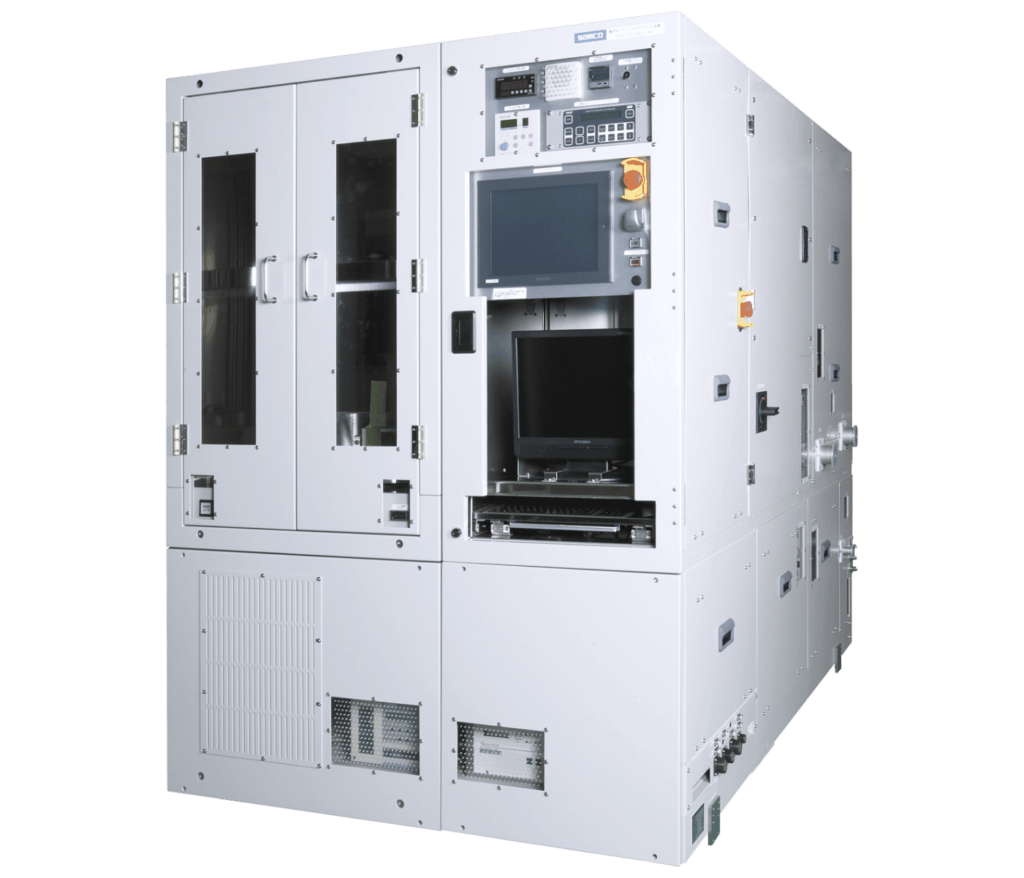
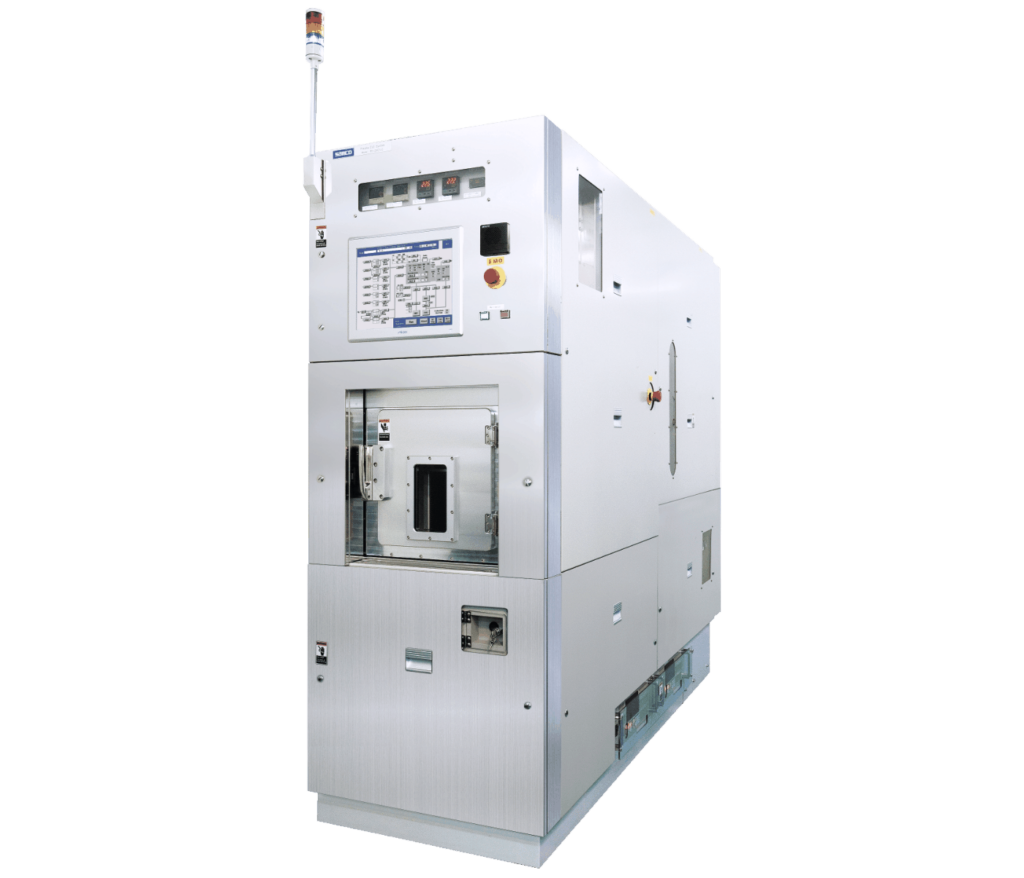
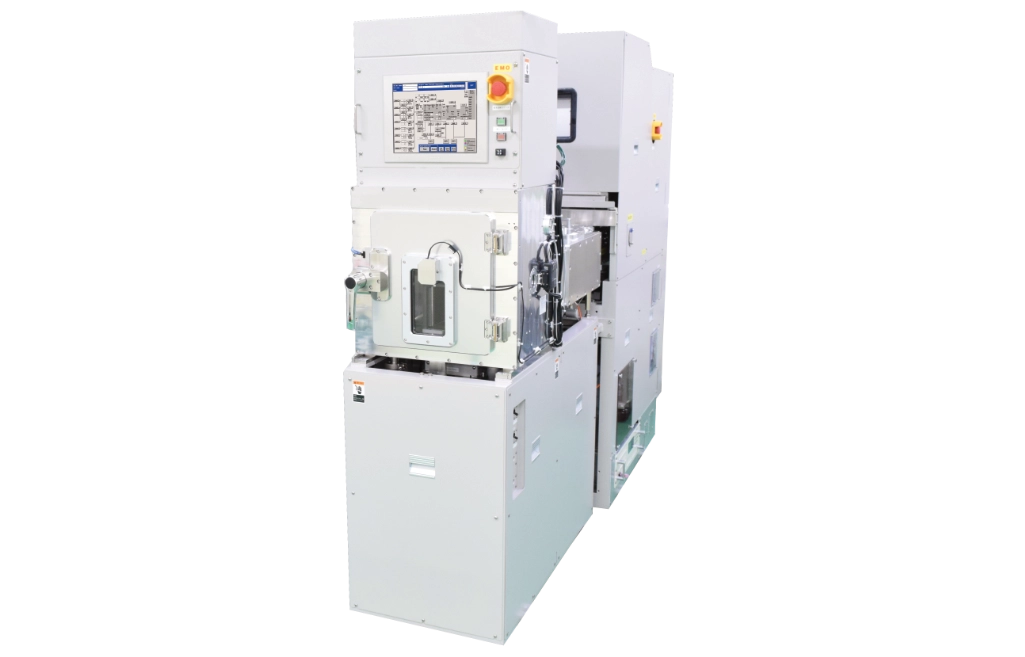
Figure 1 shows the overall appearance of the PD-2201HLC. The system consists of a cassette chamber capable of accommodating both tray cassettes and wafer cassettes, a load-lock chamber, and a reaction chamber. In addition, the system can be equipped with an optional remote plasma cleaning function and offers expandability for additional reaction chambers.
To improve productivity, enhancements were made to the heater structure, electrode design, and cleaning functionality.
In the previous model, heater ramp-up and cool-down times had a significant impact on cycle time. To address this issue, the PD-2201HLC employs a newly developed heater with excellent heat resistance and corrosion resistance. This enables shorter heating and cooling times, thereby reducing waiting time between processes.
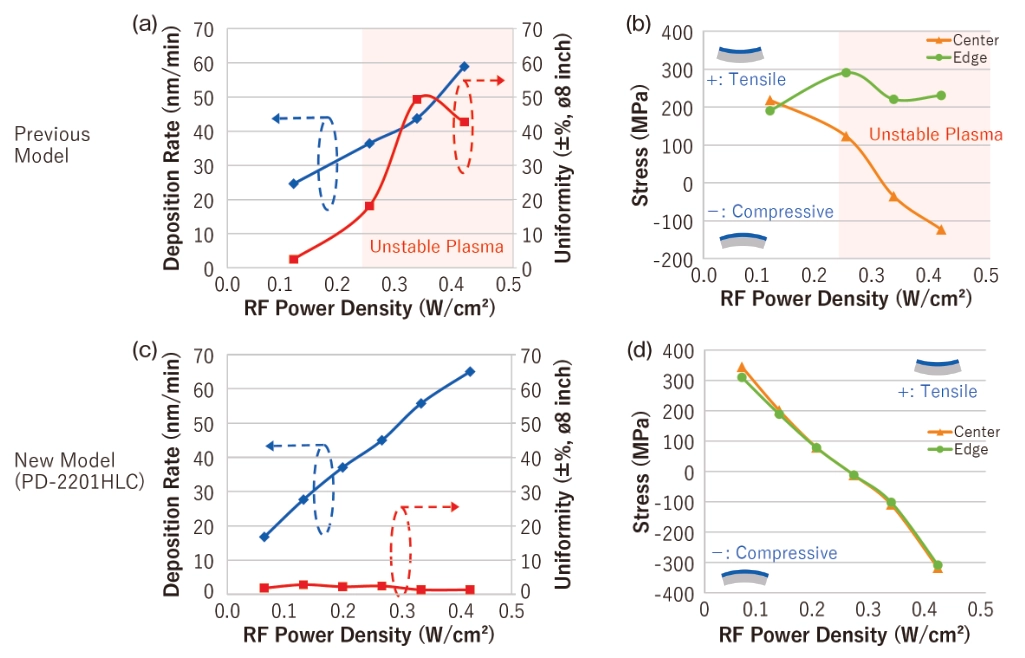
Next, the electrode structure was optimized to improve within-wafer thickness uniformity during high-rate deposition. Figure 2 compares the deposition rate, within-wafer uniformity, and stress control of the previous model and the PD-2201HLC as a function of RF power density.
In the previous model, although within-wafer uniformity was excellent, increasing the deposition rate was challenging. Increasing process parameters such as RF power and pressure raised the deposition rate, but also changed the plasma characteristics, which tended to degrade within-wafer uniformity and stress control (Figure 2(a), (b)).
To overcome this limitation, the electrode structure of the PD-2201HLC was optimized to achieve a more uniform plasma distribution. As a result, the PD-2201HLC enables high deposition rates while maintaining within-wafer uniformity and stress control at levels comparable to those of the previous model (Figure 2(c), (d)).
Finally, the addition of an optional remote plasma cleaning function significantly reduces reaction chamber cleaning time. This reduces non-deposition process time and contributes to improved overall equipment utilization.
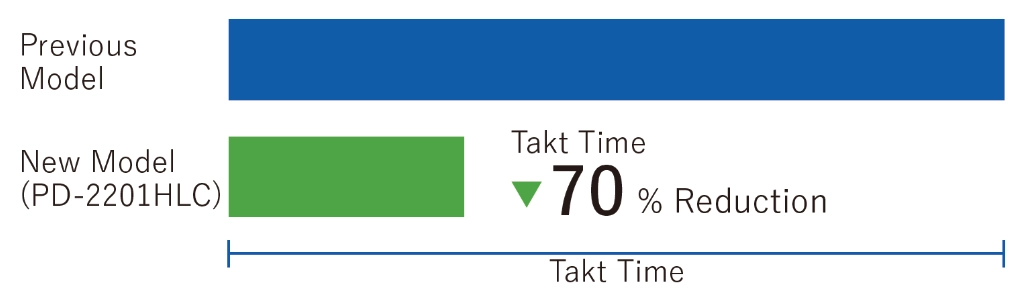
Figure 3 compares the takt time of the previous model and the PD-2201HLC. Through the combination of shorter heating and cooling times enabled by the new heater, support for high-rate deposition through optimized electrode design, and reduced cleaning time through remote plasma cleaning, the time required per cycle was reduced by approximately 70% compared with the previous model.
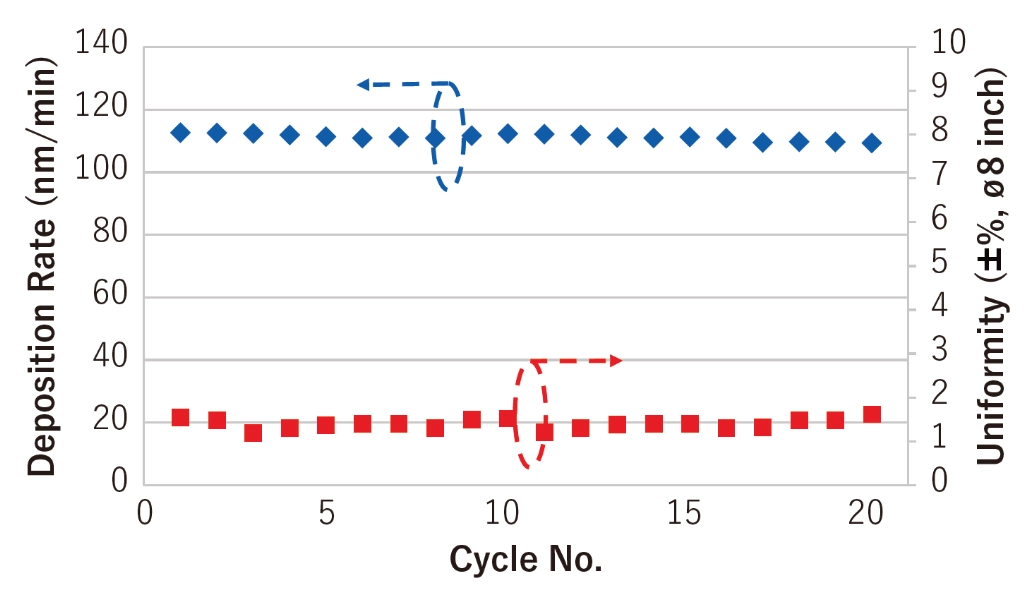
Figure 4 shows the repeatability results for SiN film deposition using the PD-2201HLC. Following a single pre-coating process of 1 µm, ten batches of 500 nm SiN deposition were performed, followed by chamber cleaning. This sequence was defined as one cycle. A total of 20 consecutive cycles were conducted, and the deposition rate and within-wafer thickness uniformity of Ø8-inch SiN films were evaluated. Over the 20 deposition cycles, virtually no variation was observed in the deposition rate or within-wafer uniformity, confirming that stable deposition performance can be maintained.
This report introduced the new plasma CVD system, “PD-2201HLC,” developed with the aim of improving productivity. This system achieves reduced heating and cooling times through the adoption of a new heater, improved within-wafer uniformity of film thickness during high-speed deposition through optimized electrode spacing, and reduced cleaning time via a remote plasma cleaning function.
Through these improvements, the PD-2201HLC reduces the takt time per cycle by approximately 70% compared with the previous model, while maintaining high deposition rates and excellent within-wafer uniformity. Furthermore, repeatability evaluations confirmed that both the deposition rate and within-wafer uniformity remain stable throughout continuous operation.
Guided by its corporate philosophy of “Contributing to industrial science worldwide through thin-film technology,” Samco will continue to develop equipment and processes that contribute to advances in both scientific research and industrial technology.