language
Samco Inc.
USA Website Next Gen

Introduction to the Dual-Chamber ALD System AD-8002LPC
You are here:
- Home
- News & Events
- Technical reports
- Introduction to the Dual-Chamber ALD…
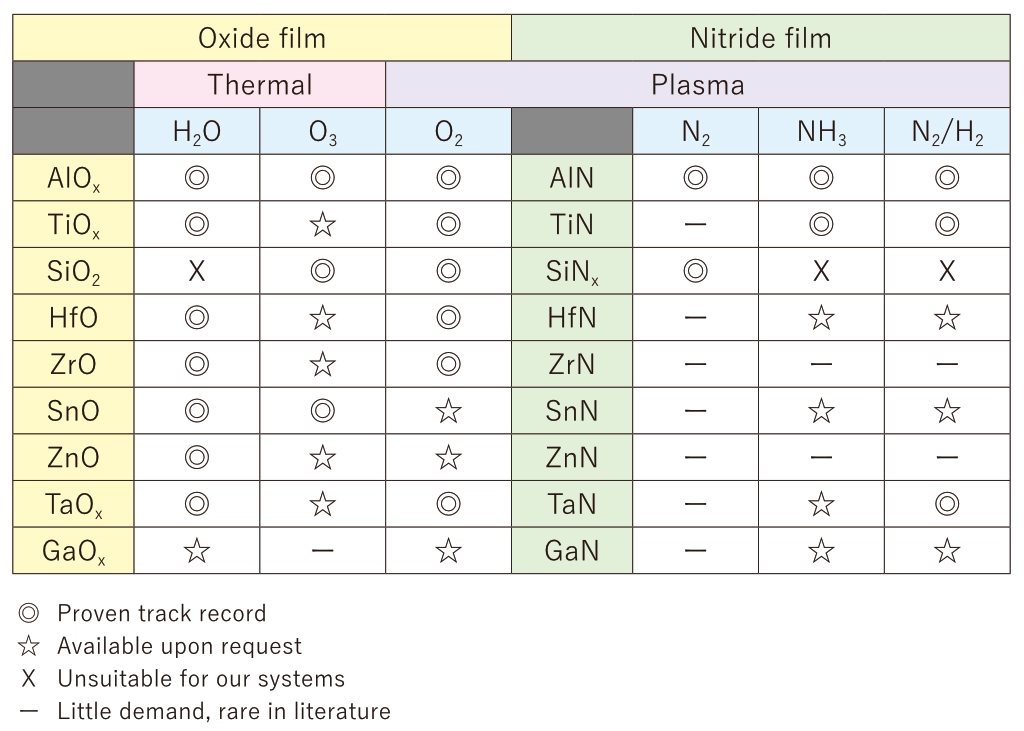
With the miniaturization and increasing functionality of semiconductor devices, the importance of Atomic Layer Deposition (ALD)—which enables nanoscale film thickness control and excellent coverage—is growing1. Among the types of films deposited by ALD, insulating oxide films such as AlO2 and SiO2 were among the first to be adopted in mass production processes and play a crucial role in manufacturing applications. Meanwhile, demand is also growing for a diverse range of film types, including nitride films, films containing heavy metals, and conductive films. As shown in Table 1, Samco is actively pursuing development in these areas as well²,³. This report introduces the dual-chamber ALD system AD- 8002LPC.
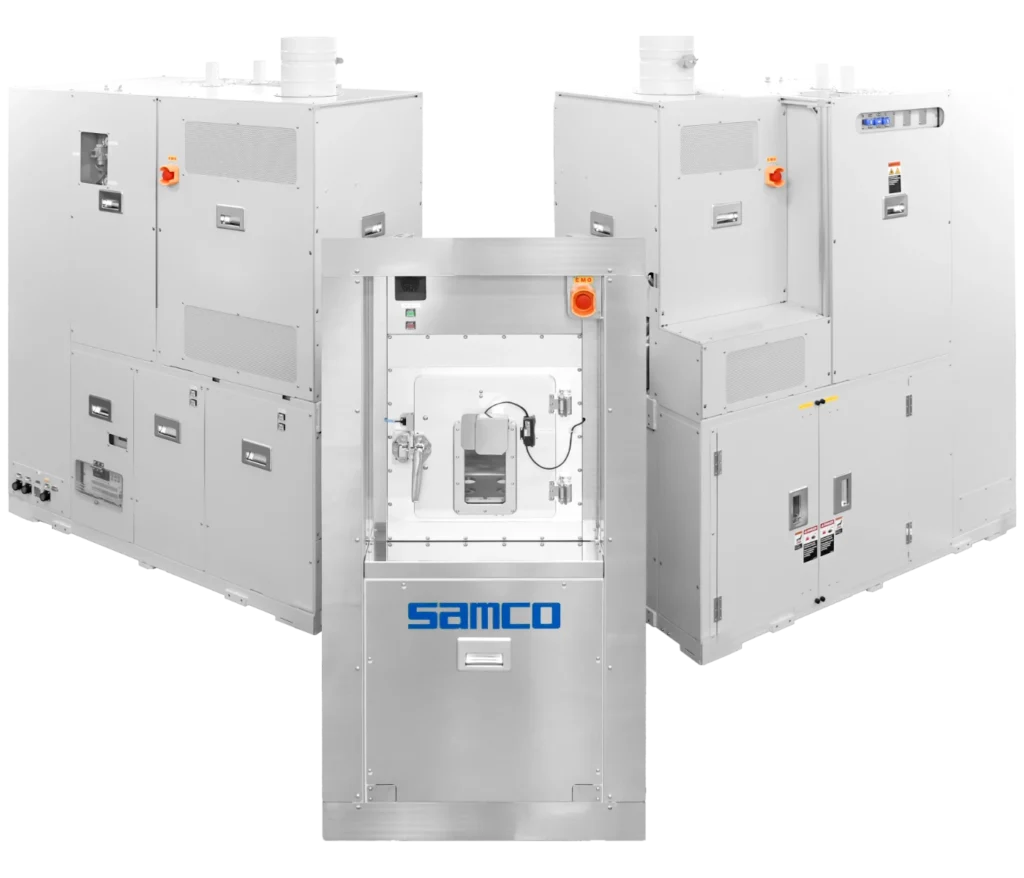
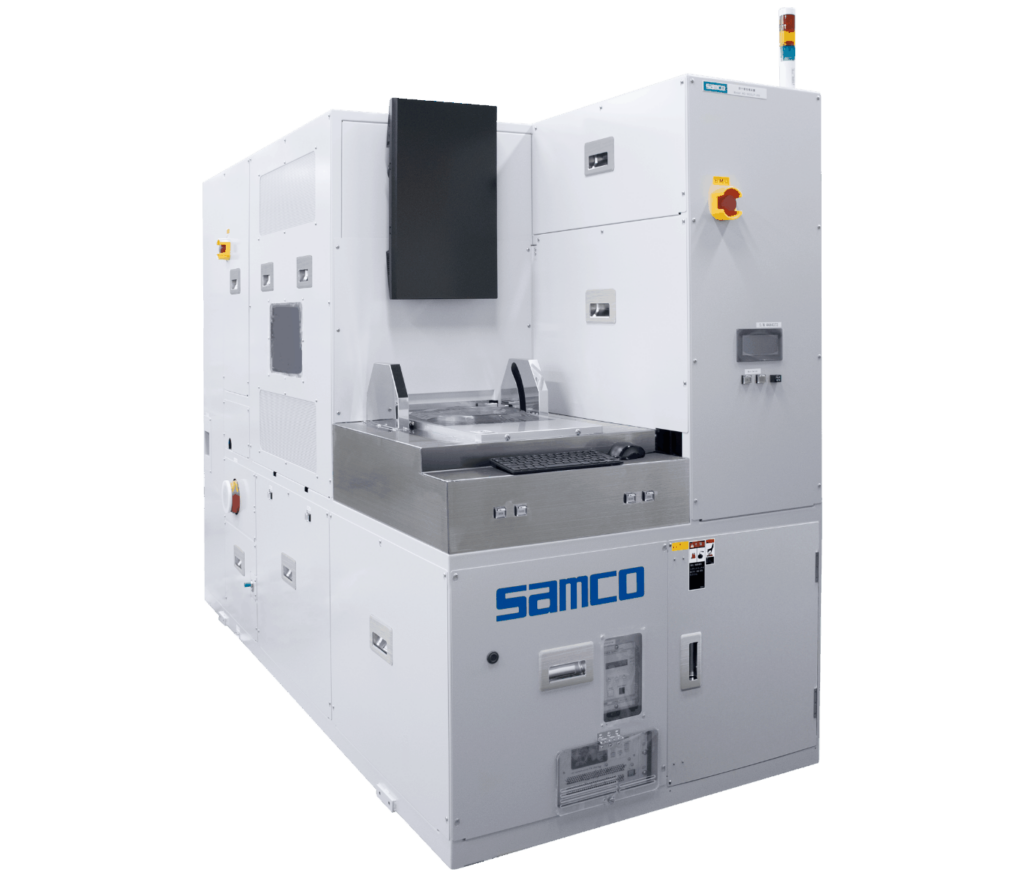
The AD-8002LPC is equipped with two reaction chambers, based on Samco’s well-established ALD system, the AD-800LP. Figure 1 shows the exterior of the system. This system is equipped with a vacuum cassette chamber and supports both direct wafer handling and tray transfer. For production applications, processing the same film type simultaneously in both reaction chambers reduces the takt time per cassette, as shown in Table 2. For research applications, depositing different film types in each reaction chamber helps minimize contamination. Additionally, the system enables the deposition of multilayer films with different deposition temperatures, a feat difficult to achieve with a single reaction chamber. In addition, by selecting appropriate precursors, the system supports deposition of a wide variety of oxide and nitride films.
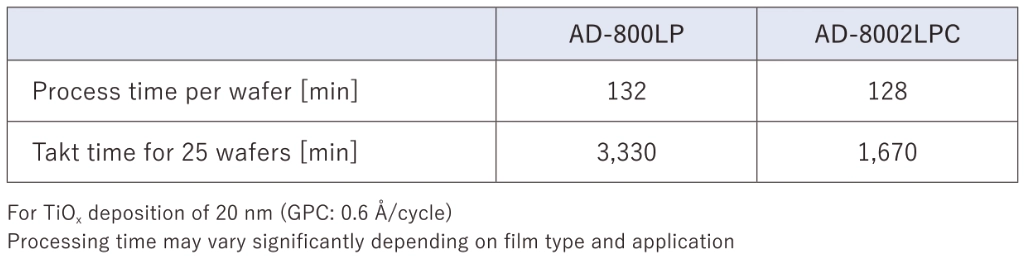
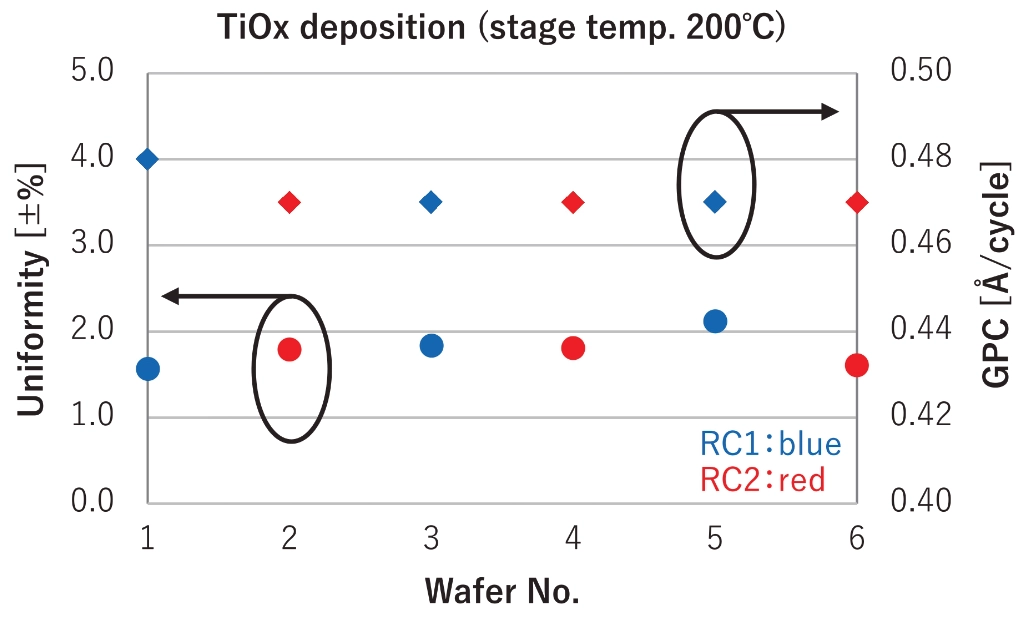
Figure 2 shows the deposition results obtained using the AD- 8002LPC. Using 8-inch Si wafers, TiOx was deposited by thermal ALD in each reaction chamber for three consecutive batches. TDMAT (tetrakis(dimethylamino)titanium) was used as the precursor, and H2O was used as the oxidant. In both reaction chambers, the uniformity and GPC (Growth Per Cycle; deposition amount per cycle) during the three consecutive batches were confirmed to be highly stable.
In this report, we introduced the specifications of the dual-chamber ALD system AD-8002LPC and the basic performance of thermal ALD deposition. This system supports not only thermal ALD but also plasma ALD, and the plasma source can be selected from two types: parallel-plate and remote plasma. Designed for a wide range of applications from research to production, the system also supports through-the-wall processing, a feature frequently required in production environments. Going forward, we plan to expand the dual-reactor configuration to include “ALD+α” processes such as “ALD+CVD,” “ALD+ALE,” and “ALD+Aqua.”* We will continue to develop both the equipment and processes to meet customer needs.
*Aqua Plasma®: Samco’s proprietary water vapor-based plasma surface treatment process.
Samco Inc., “Plasma enhanced and thermal ALD system AD-800LP,” Samco Now, Vol. 118 (July 2022).